Unitree Robotics, 2026
Three projects I worked on at Unitree.
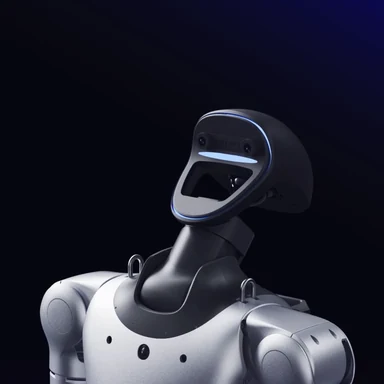
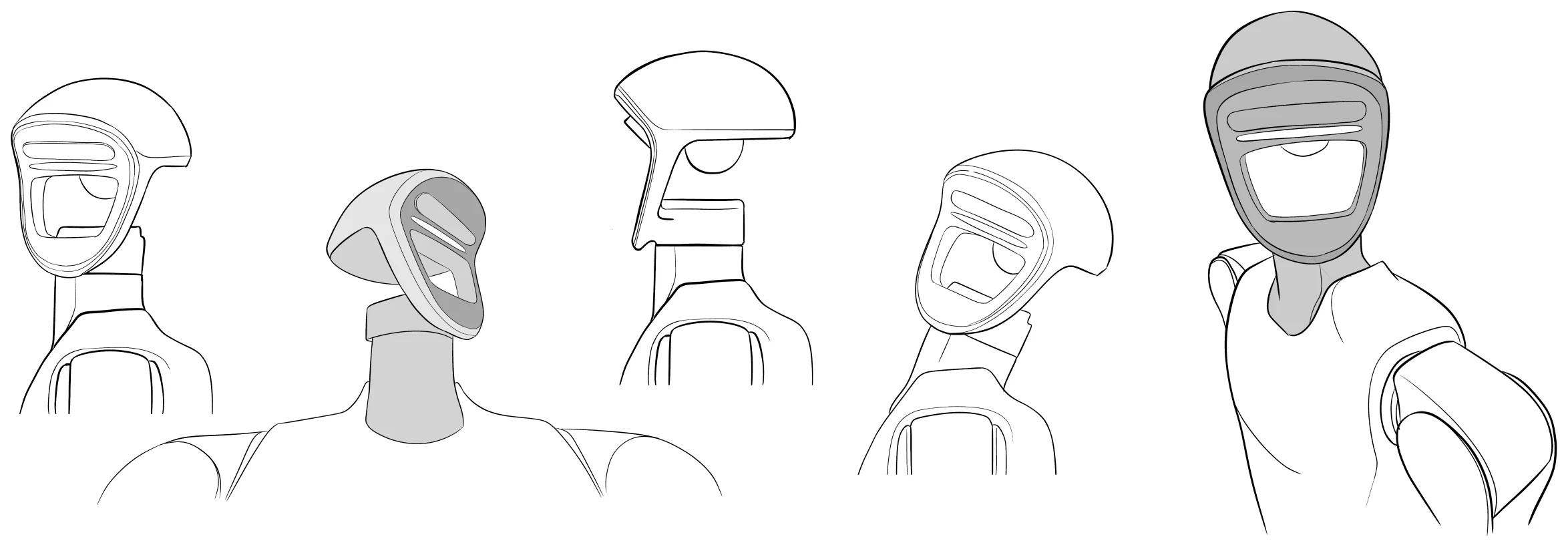
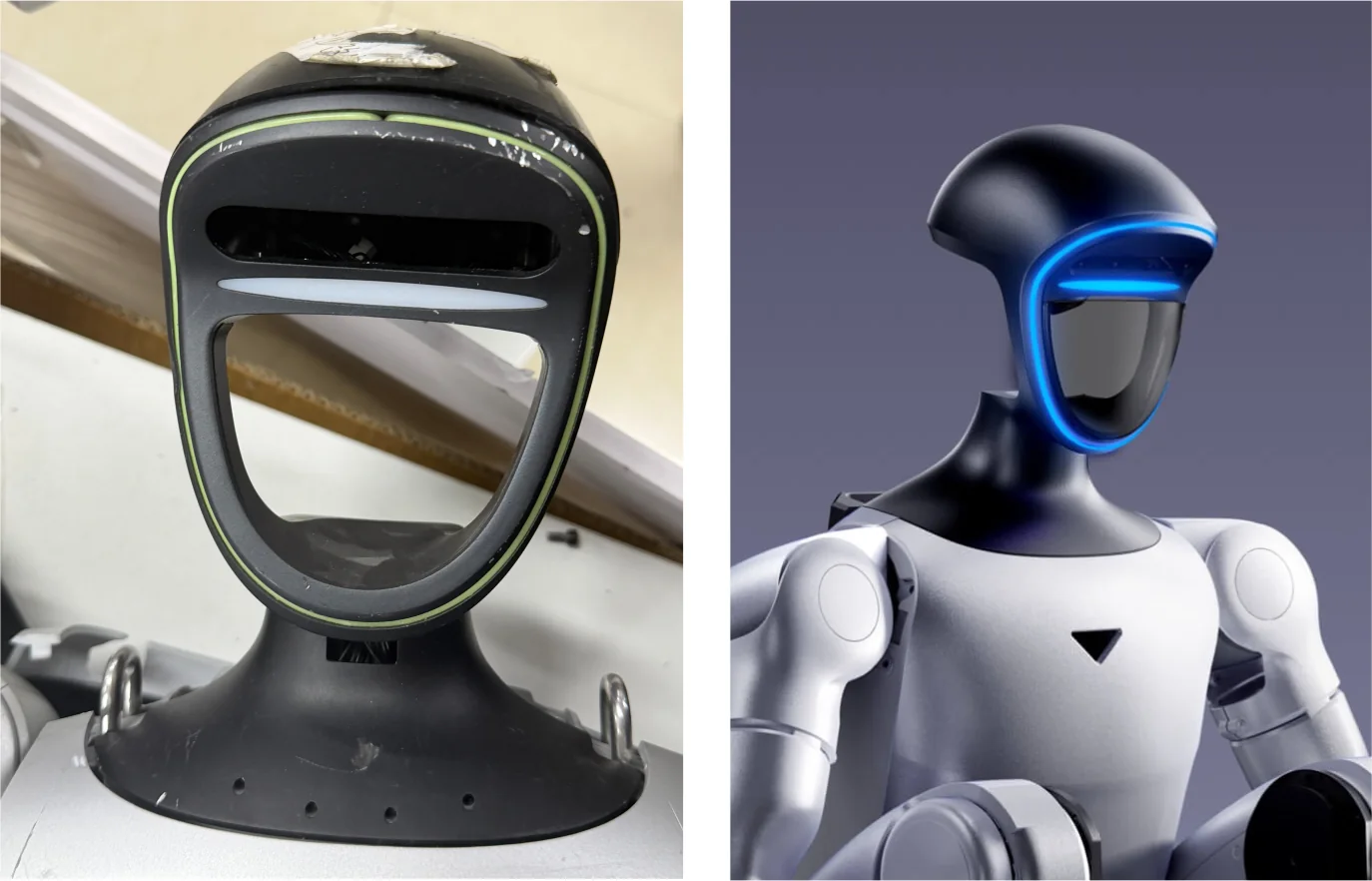
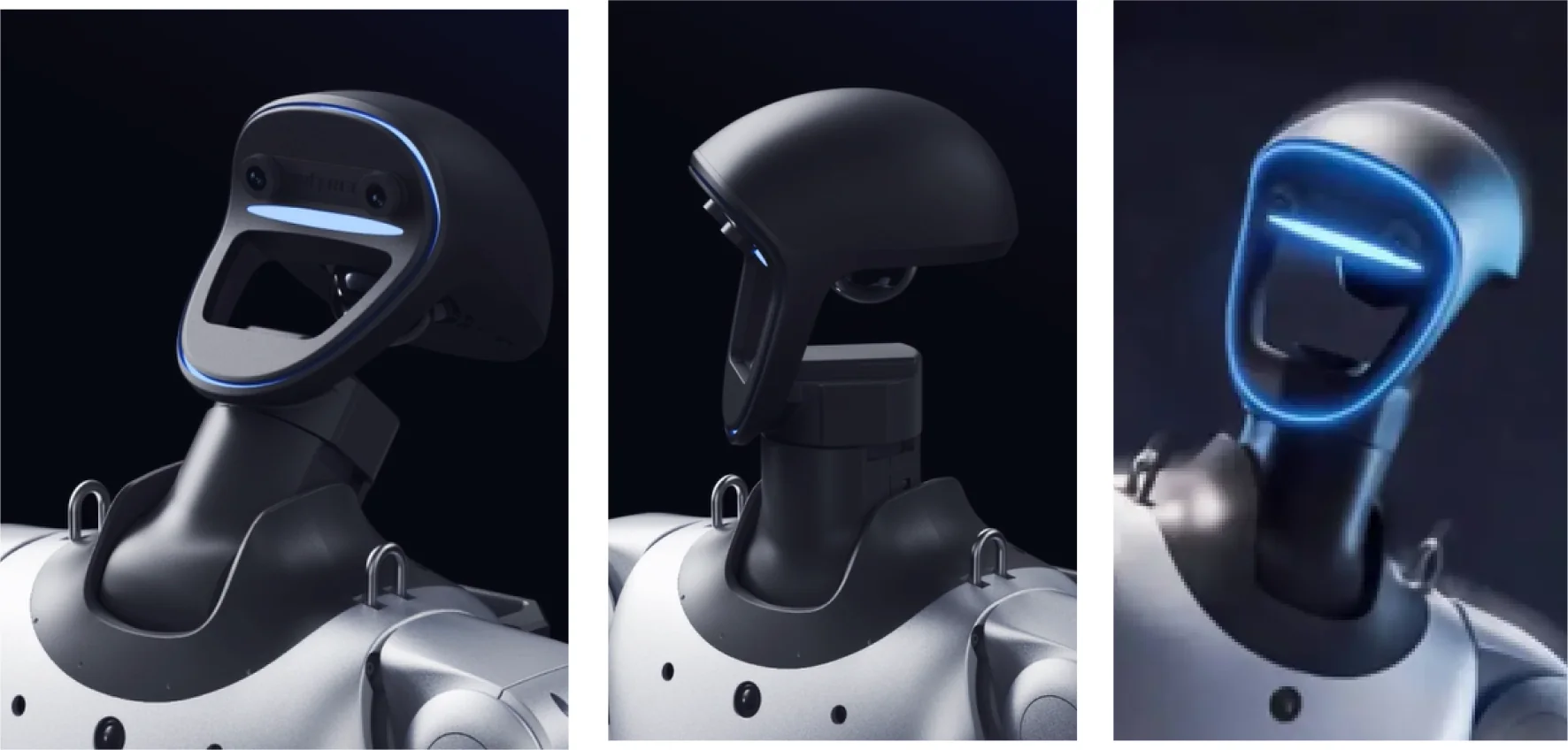
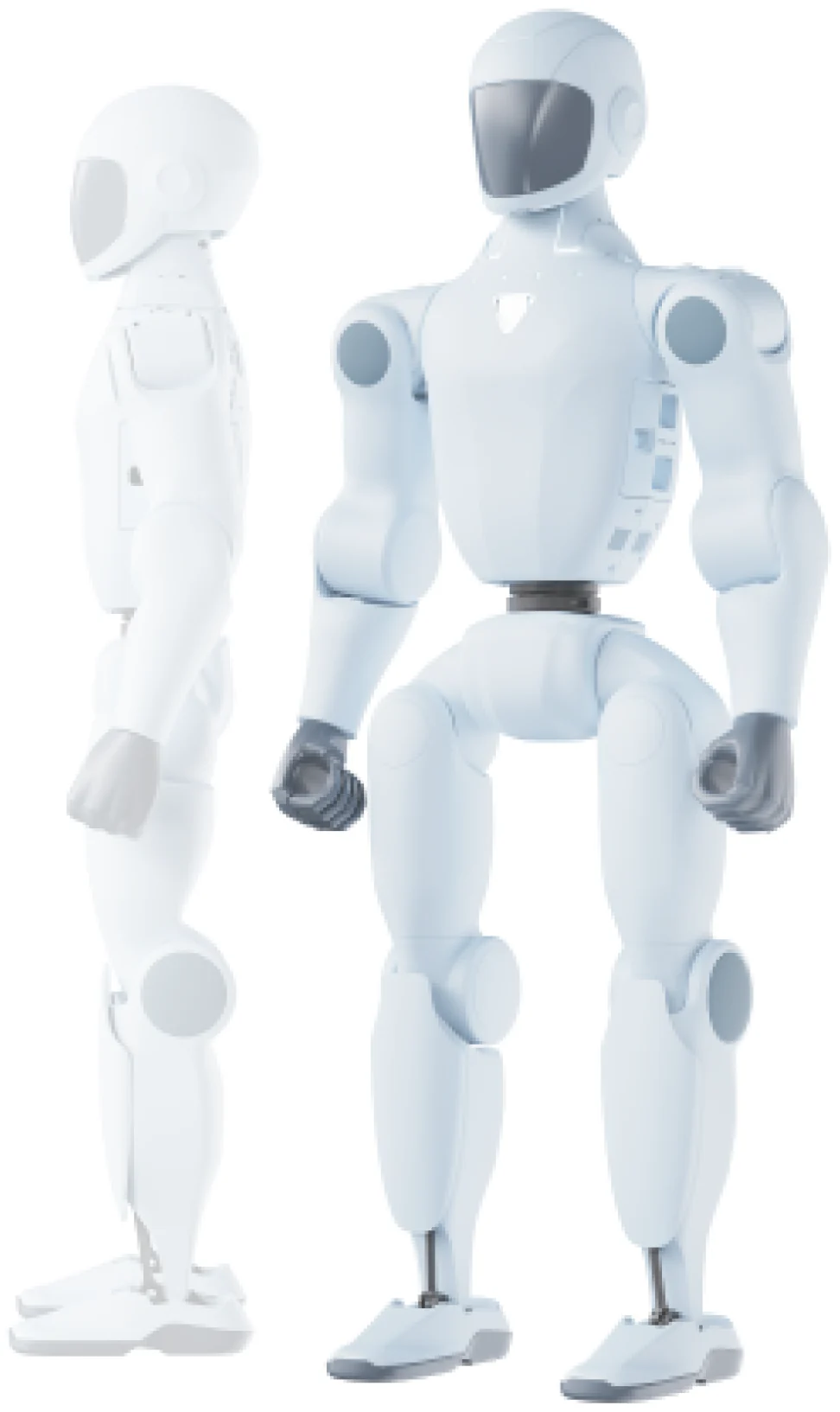
G1 NeckProposed and designed a new neck
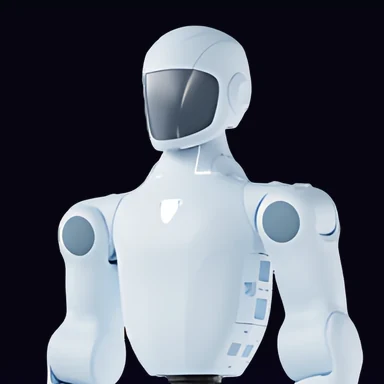
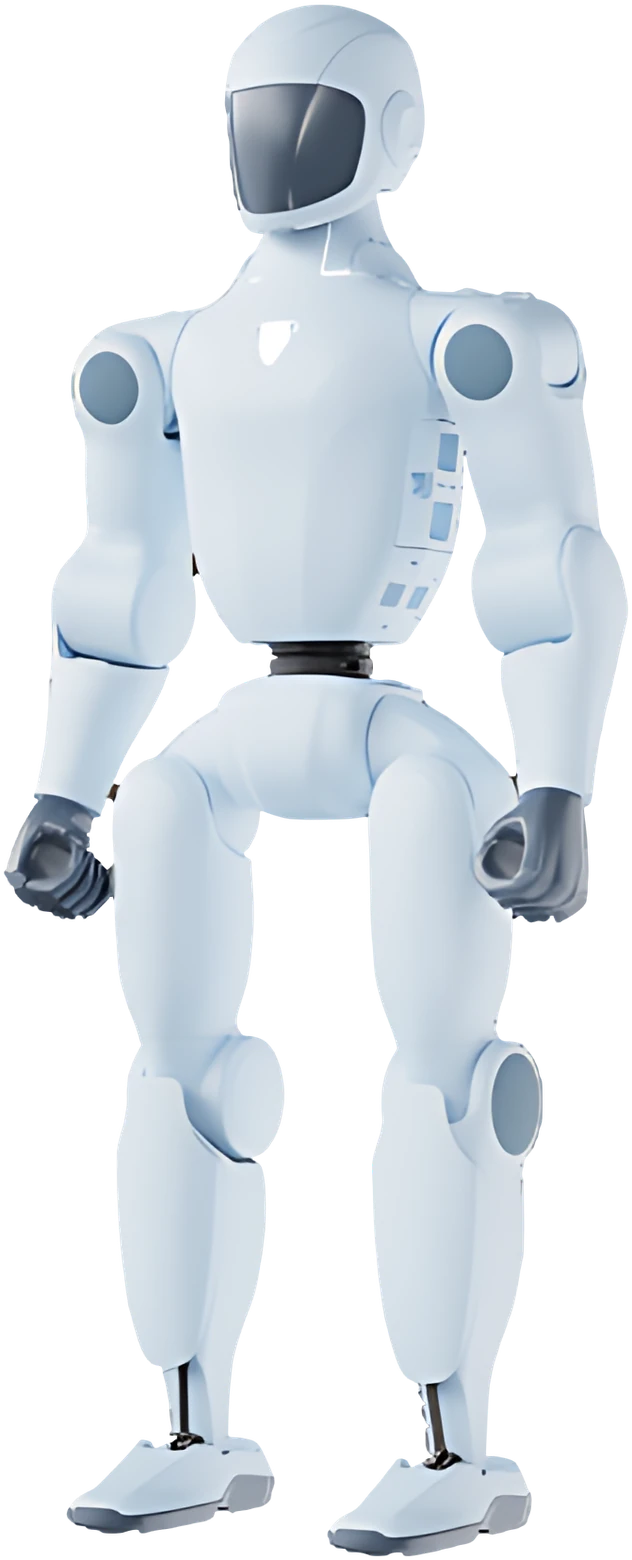
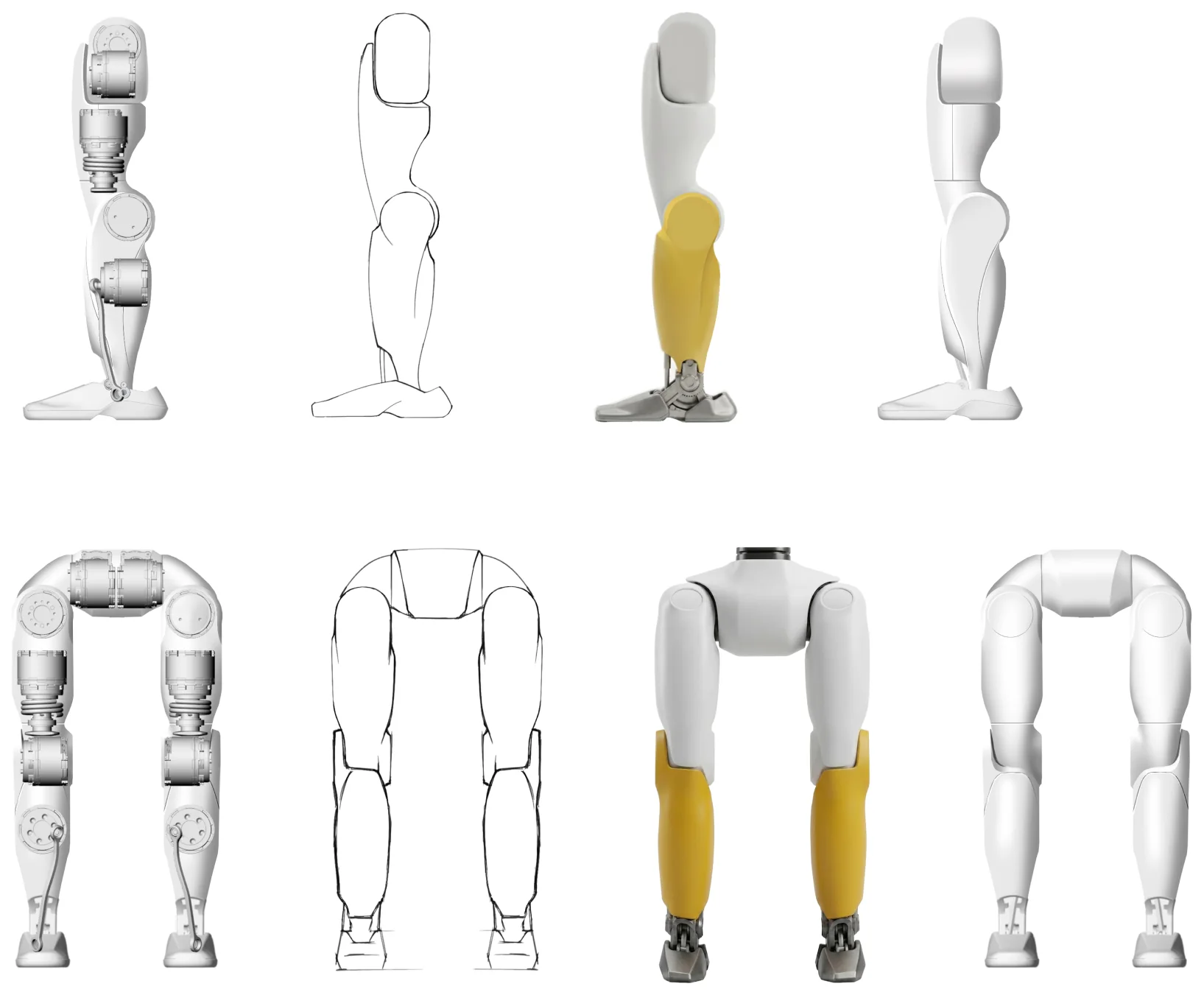
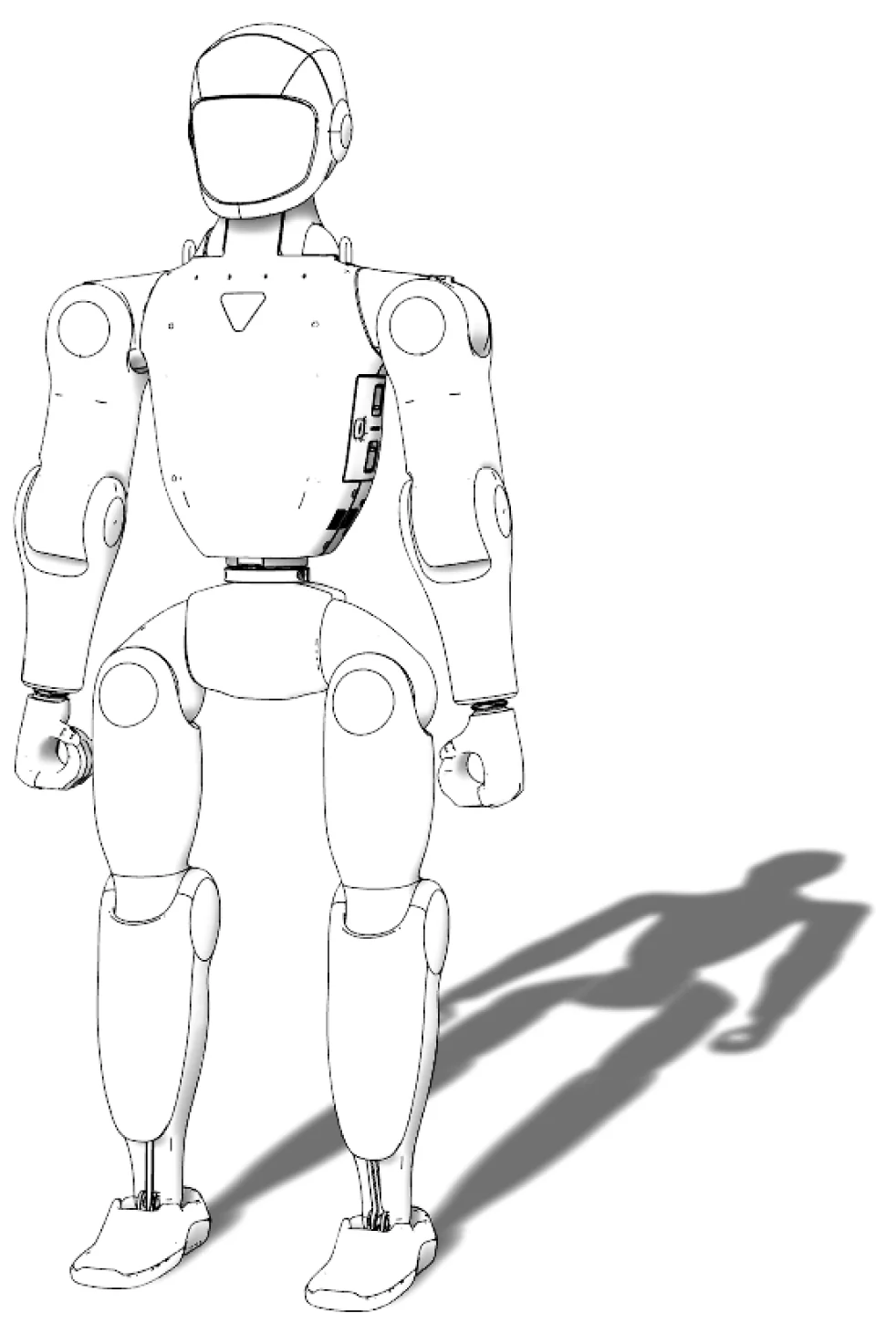
RD95Led the industrial design of a home humanoid
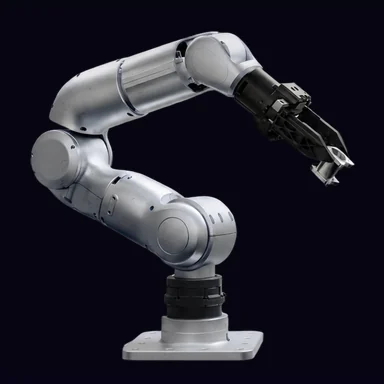
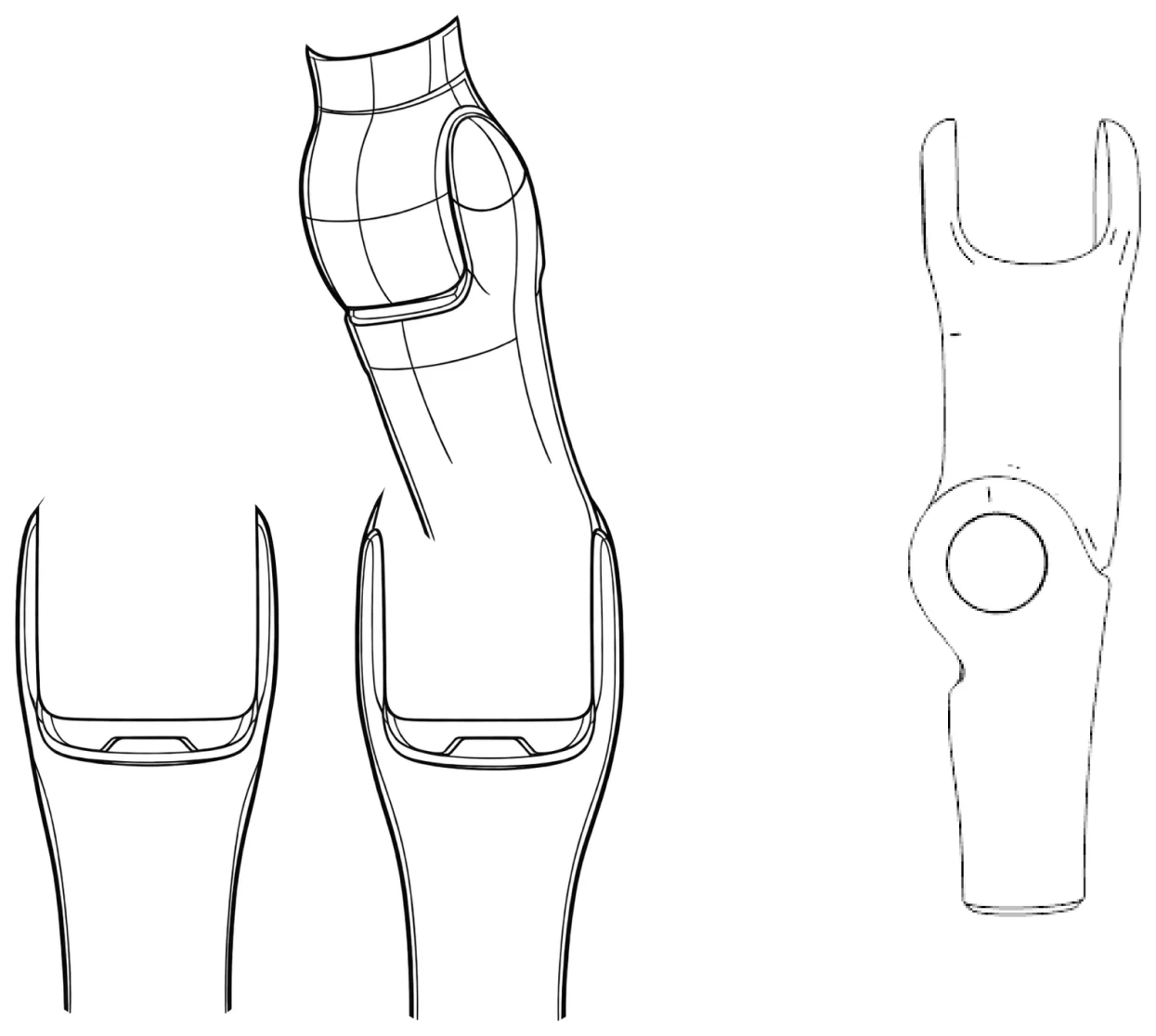
D2 ArmWorked on the arm’s exterior designIndustrial design · HRI research
01 · Making
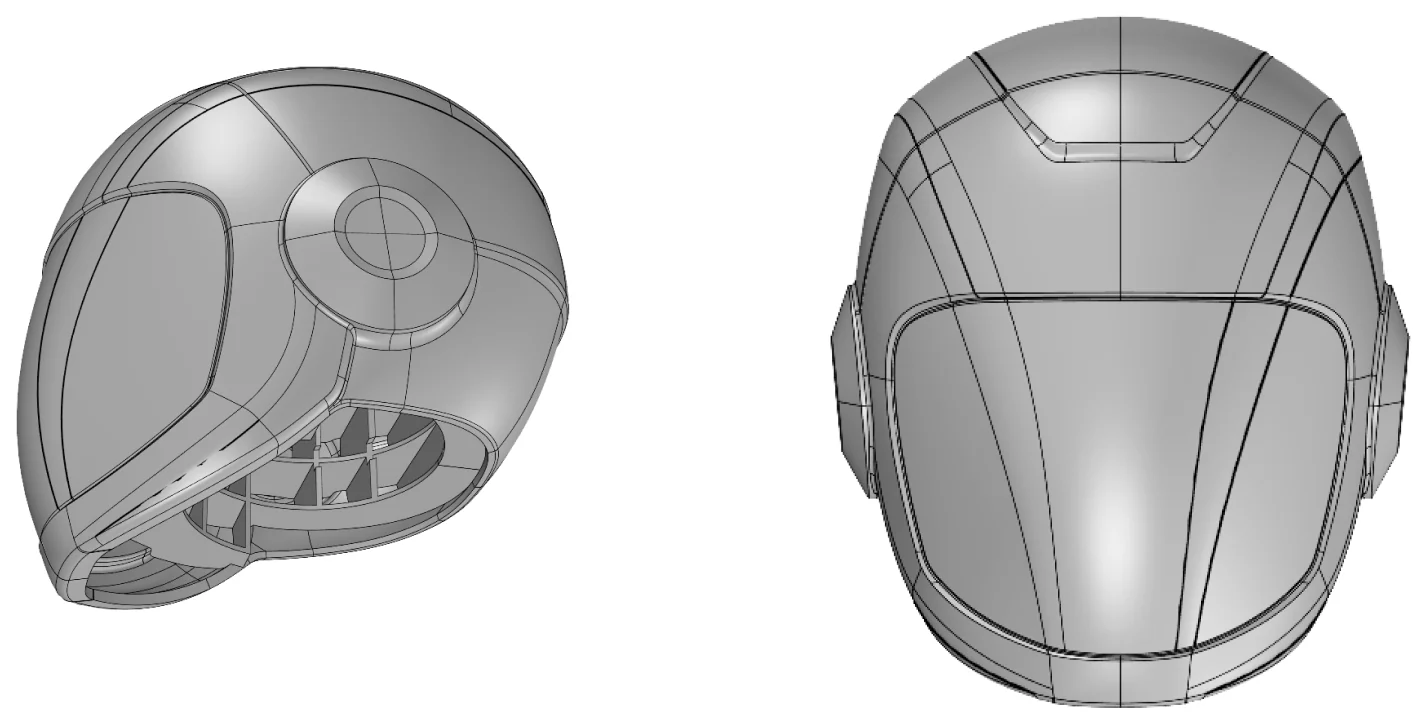
G1 had no neck joint, so it turned its whole body to look at something. I designed a two-joint neck that turns and nods, and proposed a friendlier finish for the head. Unitree now sells it as G1+.


G1+, on sale since September 2026
+2 joints
Turns ±110°, nods −25° to 36°
02 · Research
Four findings from seven studies with 264 people, without the head movement → with it.
Looks at the person
12.8 → 19.7times people looked back
Nods in reply
21% → 42%how often people nodded back
Looks at the handover spot
2.54 s → 1.91 suntil people reached for the object
Looks away while thinking
330 ms → 608 msbefore people interrupted it
Sidner et al. 2005 and 2006 · Breazeal et al. 2005 · Mutlu et al. 2006 · Boucher et al. 2012 · Moon et al. 2014 · Andrist et al. 2014
“You have more information than I do. Do you have of any complete HRI models we could directly apply to our design at this stage?”
Unitree’s industrial design lead
Instead of a complete model, I worked from findings like these, and proposed a head turn before every move in RD95.

03 · Making
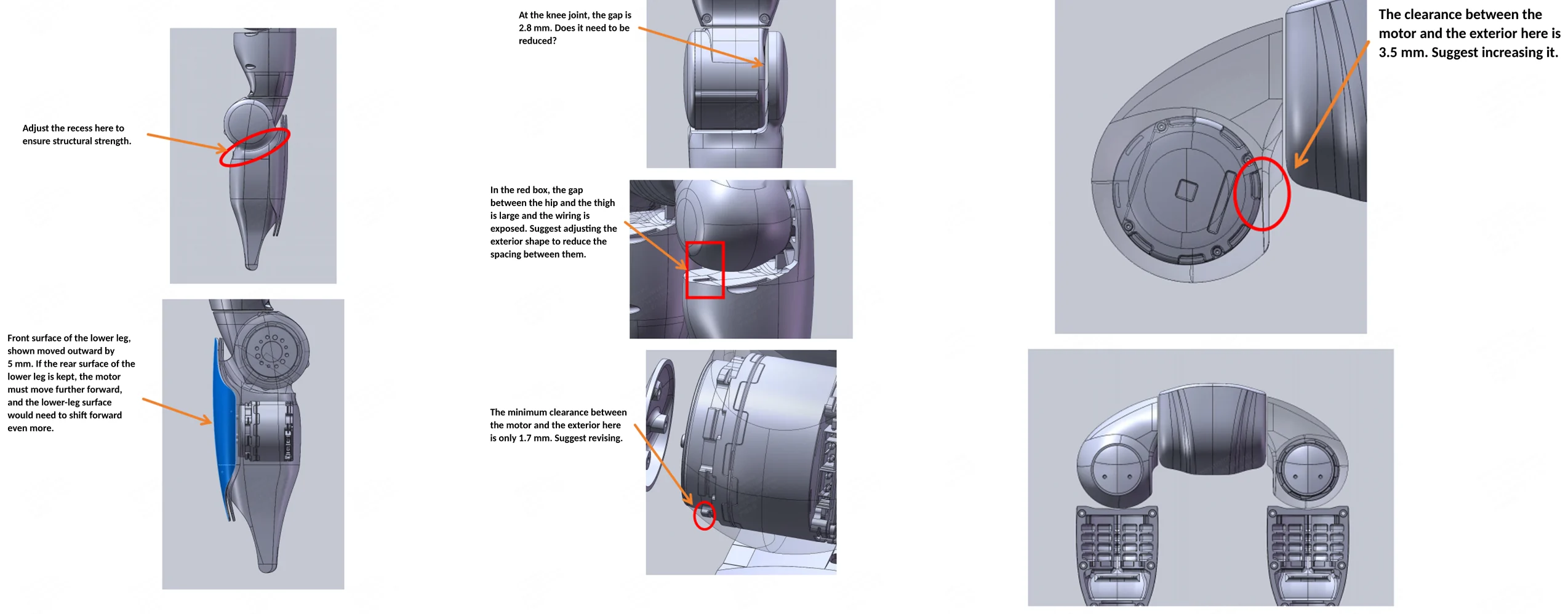
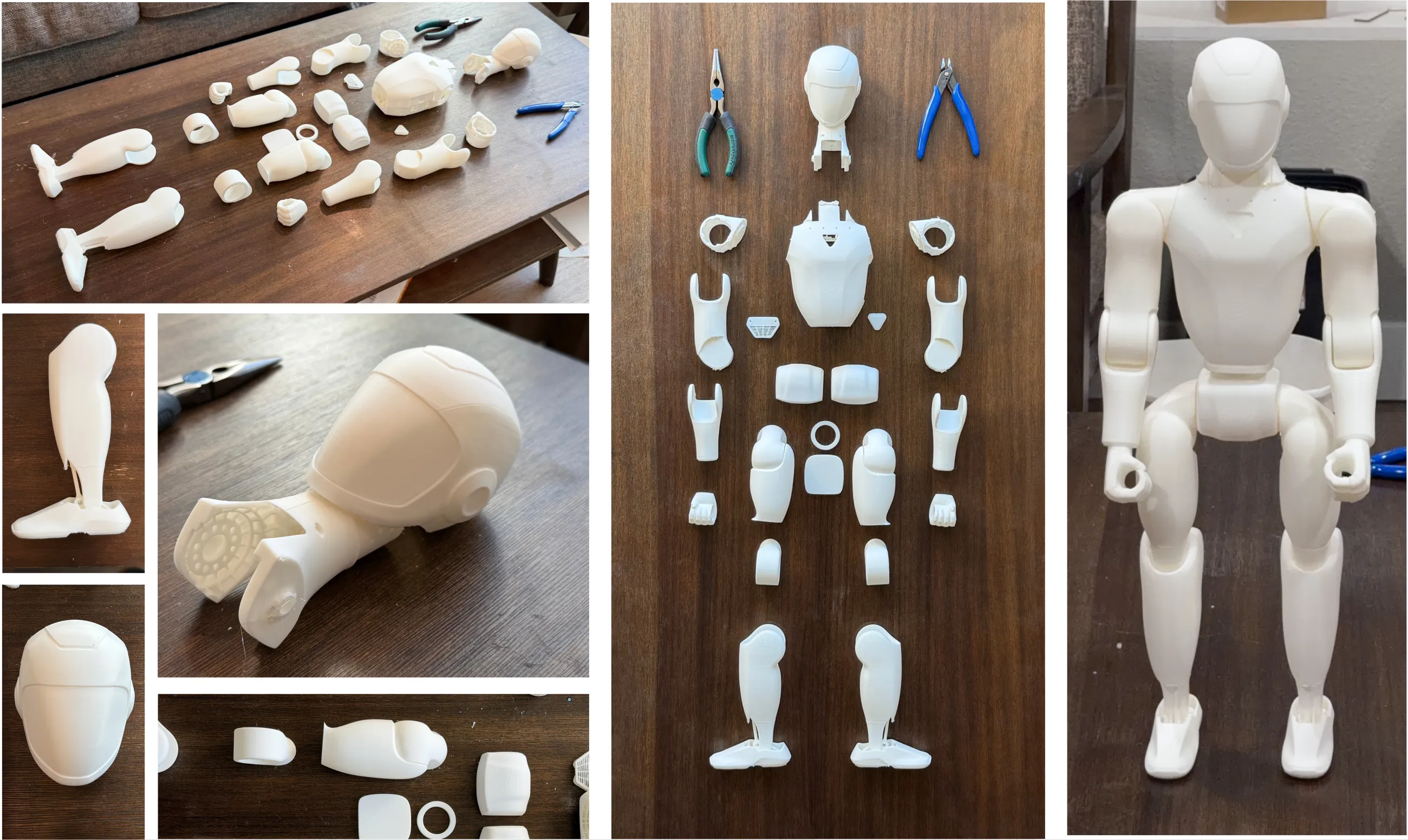
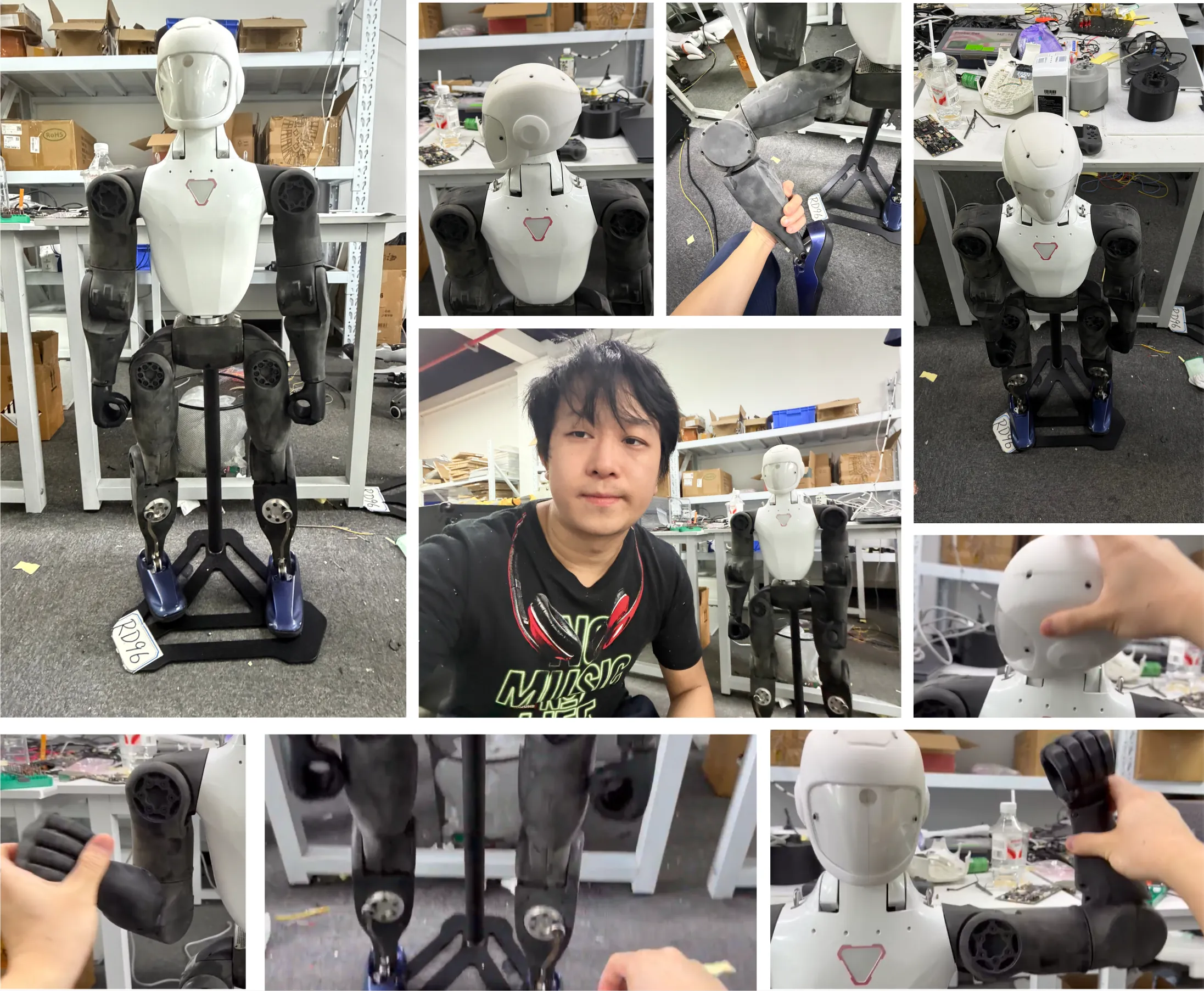
A humanoid just under a meter tall, for everyday jobs at home: fetching, cleaning, clearing up after meals. I led its industrial design, from first sketches to a pre-production prototype.
In my proposal, it starts a job only when asked and turns its head toward the task before every move, so you can stop it.
04 · Research
Twenty-one older adults preferred a robot for chores and a person for care, meals and company (Smarr et al. 2014). Those ratings set how RD95 handles each job. Tap one to see what it does and why.
No job scored 4 of 5 or higher, so RD95 never starts one on its own.
None of the 237 papers I reviewed tested whether people can stop a humanoid that signals its next move first.
My hypothesis: a robot that signals its next move is easier to stop.
Smarr et al. 2014 · American Time Use Survey 2025 · each finding’s source is on its card. Full research board
05 · Making
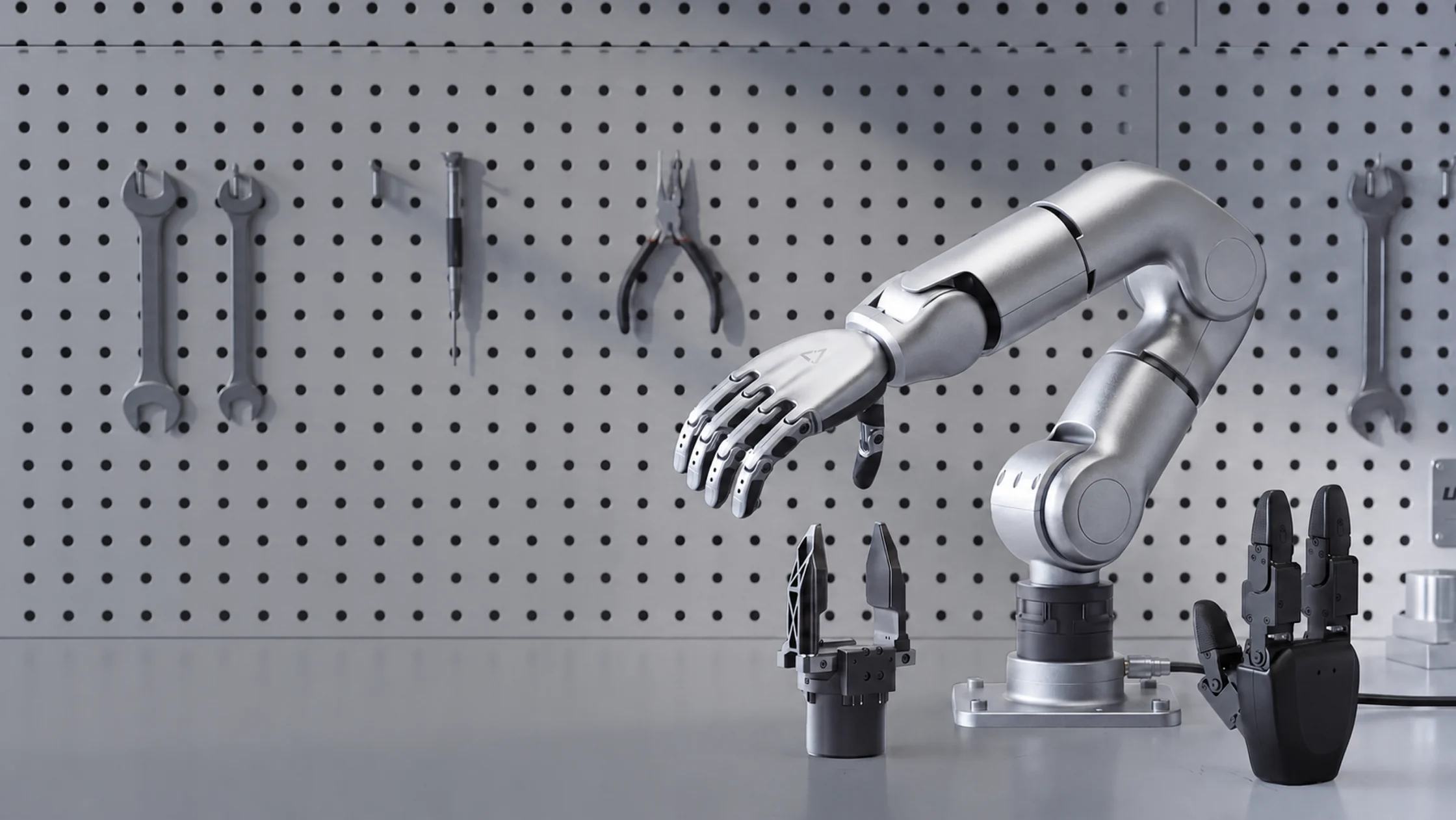
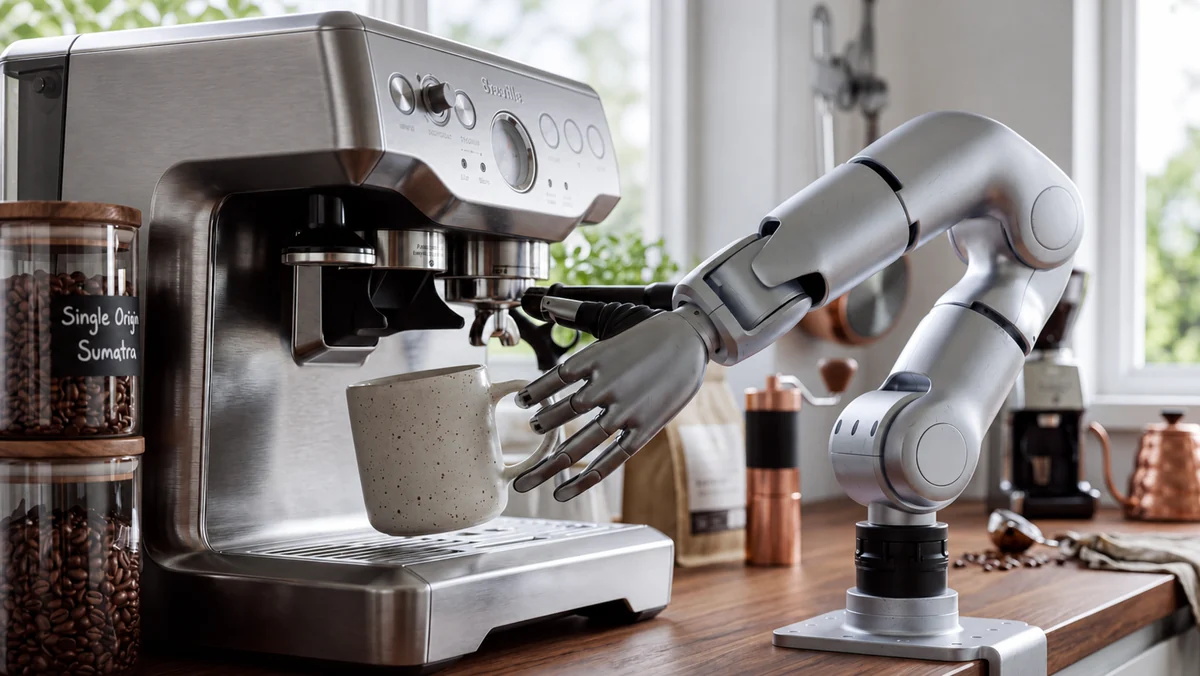
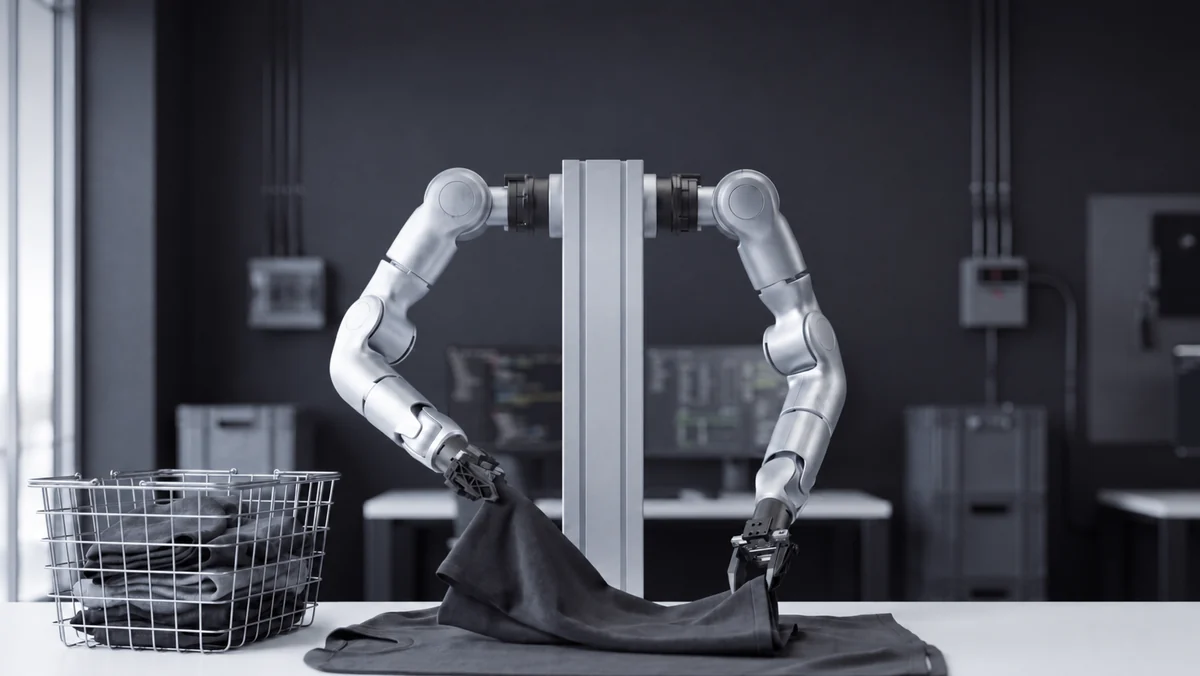
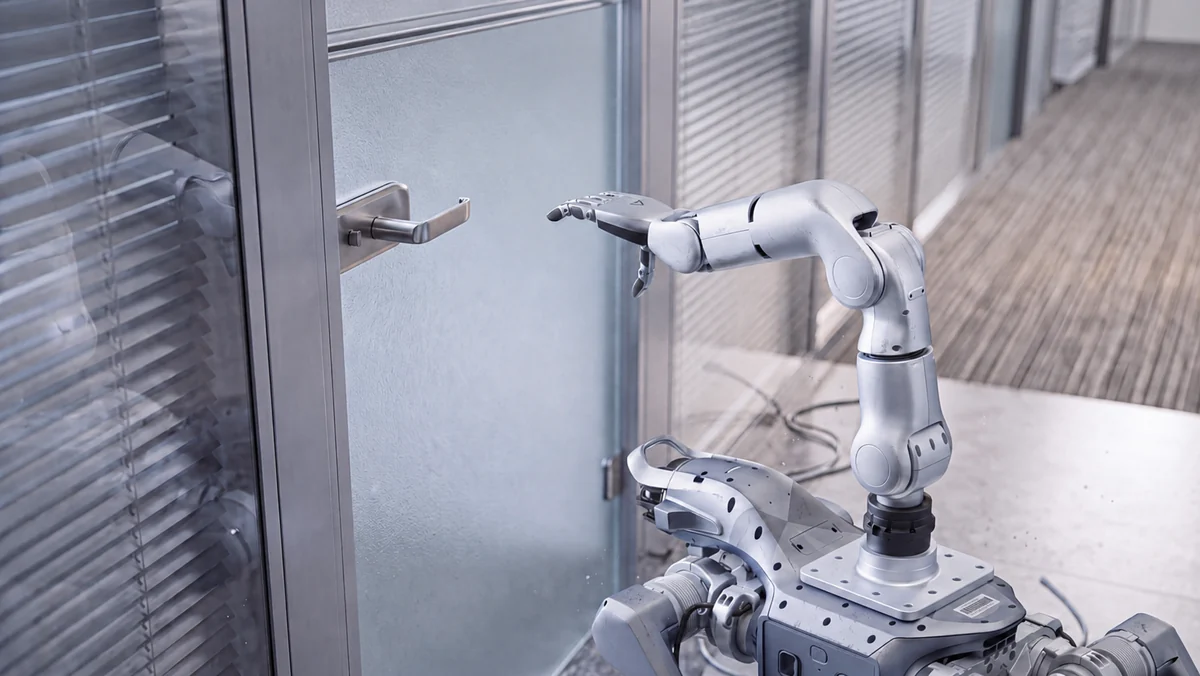
A separate project: Unitree’s all-metal robotic arm. I worked on its exterior design.

A light strip at the base shows its status.
Two arms can work as a pair.
Guide it by hand to teach it a move.


7 joints + gripper · 633 mm long · carries 3 kg · weighs 5.9 kg